
How to Search Criminal Dockets
There is no single countywide list. Felony cases in Seneca County live in the General Division, and the online starting point is the Common Pleas Court Case Inquiry. Choose the Criminal case type, then look up a party by Name/Company, a Hearing Date, or a case number. The form itself shows the local example 20CR1234. In that pattern, the first two digits give the year, and the rest is a criminal letter code plus a number sequence.
Misdemeanors are different. Use the Tiffin-Fostoria Municipal Court Record Search, which takes a name, hearing date, file date, ticket number, or case number. Enter digits only in the case-number field. No letters, per the instructions on the form. Both portals ask you to accept a notice and pass a CAPTCHA, and both warn that new entries can lag a filing or judicial action by at least 24 hours.
- Identify whether the matter is a felony or a municipal misdemeanor case.
- Open the matching Common Pleas or Municipal Court portal and accept its access notice.
- Use a name, the court's case-number format, or a hearing date with the Criminal filter selected.
- Open the matching result and compare its court, case type, dates, and chronological docket activity.
- For a verified answer or copy, contact the clerk or use the appropriate records-request path.
Note: When a hearing or filing date is close and nothing has posted yet, ask the clerk to confirm before assuming anything.
Seneca County Criminal Docket Fallbacks
When the portal comes up empty, go straight to the people who keep the record. For Common Pleas felony cases, call the Clerk Legal Department at 419-447-0671. You can also visit the counter in Suite 101. The Clerk also offers a public-records request form for written copy requests. On the misdemeanor side, the Tiffin clerk answers at 419-448-5411. The Fostoria clerk can be reached at 419-435-8139. Each office runs its own counter or written-request process. Local e-filing is for submitting papers, not for reading a public docket. A clerk contact is also the best route for a certified copy. It helps just as much when the latest activity has not posted yet.
Seneca County Criminal Docket Filters
Filtering matters. The Common Pleas Case Inquiry also holds appeals, civil, domestic relations, judgment-lien, and miscellaneous categories, so a broad search can drag in matters you never wanted. Set the Criminal filter first. A felony case search can then start from a full name typed last-first-middle, a hearing date, or a known case number. Calendar Search sits on its own tab, built for court-date research rather than a general name lookup. The official Case Inquiry entry page opens the form. That form sits behind this Seneca County criminal docket view.
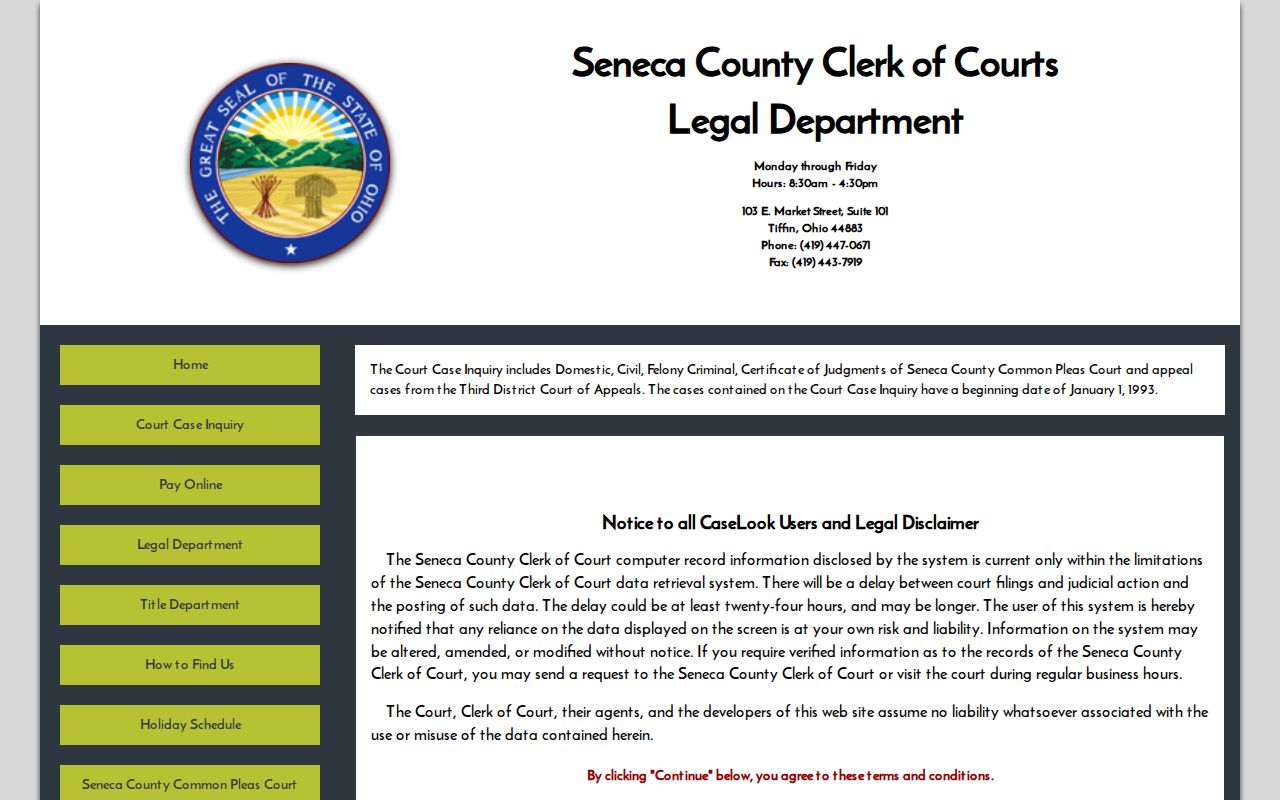
Pick the court and case type before trusting any match. The portal lets you set result sizes of 25, 50, 100, or 250. That choice changes page length only, never which court owns the record.
What a Criminal Docket Shows
A Seneca County criminal docket ties a case number and court to the filings, hearing dates, dated entries, and the current or final status of the matter. The local portals provide the search fields and calendar paths described here. What any single public screen will display, field by field, varies. Some records show more than others, and document images are not guaranteed on every view. The concepts below are the ones Seneca County's own tools support, so read them as a map of what the docket can contain rather than a promise of what every screen shows.
| Case number | Common Pleas displays an example such as 20CR1234; Municipal CaseLook requests numbers only, with no letters. |
|---|---|
| Court and case type | The court identifies whether the matter belongs to Common Pleas felony criminal or the Municipal criminal docket. |
| Filing or hearing date | A case search can use a hearing date, while Calendar Search is designed for a date range and scheduled settings. |
| Docket entry | A dated register line can reflect a filing, order, setting, continuance, or other case activity. |
| Disposition | The recorded outcome or current resolution may include a plea, dismissal, conviction, judgment, or other final order. |
Read docket entries in order, since each one builds on the last. A continuance entry means a court date moved. It does not mean the criminal case ended. And a certified copy from the clerk carries weight a portal display does not.
Seneca County Criminal Setting Rhythm
The Common Pleas local rules sketch a felony's usual pace. Arraignment tends to fall about 10 to 14 days after indictment. A pretrial typically follows around 30 days after arraignment. A plea date tends to land near 60 days. A jury trial sits near 90 days. Treat these as guideposts only, because the actual docket and the court set the real dates for any given case.
- Arraignment
- The stage at which rights and pleas are addressed after a criminal case reaches court.
- Pretrial
- A scheduled management conference before trial, placed around 30 days after arraignment in the ordinary local felony sequence.
- Accelerated docket
- A Common Pleas criminal scheduling track with a firm pretrial or plea goal within 30 days after arraignment.
- Continuance
- A request or order moving a setting. It is not a final disposition.
That timing pattern explains something people often find odd. A docket may list several future events rather than one lone trial date.
Seneca County Criminal Continuance Rules
The Common Pleas local rules split the calendar year into January, May, and September terms. A written continuance motion must state its reason. It must also deal with service and consent and list any prior continuances. No same-day continuance without good cause. Keep in mind that a continuance shifts a hearing while the criminal case stays active. For the current setting, check the docket. The clerk is the other source to check.
Stages on a Criminal Docket
A criminal docket logs stages as a case advances. The exact route depends on the court and the charge level. A felony may start with a charge and reach Common Pleas only after indictment. A municipal matter runs from arraignment to later hearings. It may end at trial or reach a resolution. A preliminary hearing plays its own part when a higher-penalty charge begins in Municipal Court.
Docket flow: Filing or charge › arraignment › preliminary hearing or pretrial › plea or trial › disposition › sentencing when applicable.
The Municipal Court's published criminal information covers arraignment. It describes arraignment as an advisement of rights plus a plea. Plead guilty or no contest to a misdemeanor. The case can often wrap up there with sentencing. Plead not guilty and it heads toward trial instead. These are process descriptions, not a catalog of exact local docket codes.
Seneca County Misdemeanor Docket Route
Where a Seneca County charge lands depends on how serious it is. Felonies belong to the Common Pleas General Division. Misdemeanors go to Tiffin-Fostoria Municipal Court. The path can cross both courts, though. A higher-penalty charge may start with a Municipal Court preliminary hearing, and if probable cause is found there, final disposition moves to Common Pleas for the geographical jurisdiction of the offense. So a felony docket search can mean checking both stages.
| Local criminal path | Primary docket location | Search point |
|---|---|---|
| Felony criminal case | Common Pleas General Division | Clerk Case Inquiry, Criminal filter, or Calendar Search |
| Misdemeanor criminal case | Tiffin-Fostoria Municipal Court | Municipal CaseLook, Criminal filter, or Calendar Search |
| Felony preliminary stage | Municipal Court before possible bindover | Municipal search first, then Common Pleas if the matter proceeds |
The Tiffin-Fostoria Municipal Court criminal division provides the source image below.
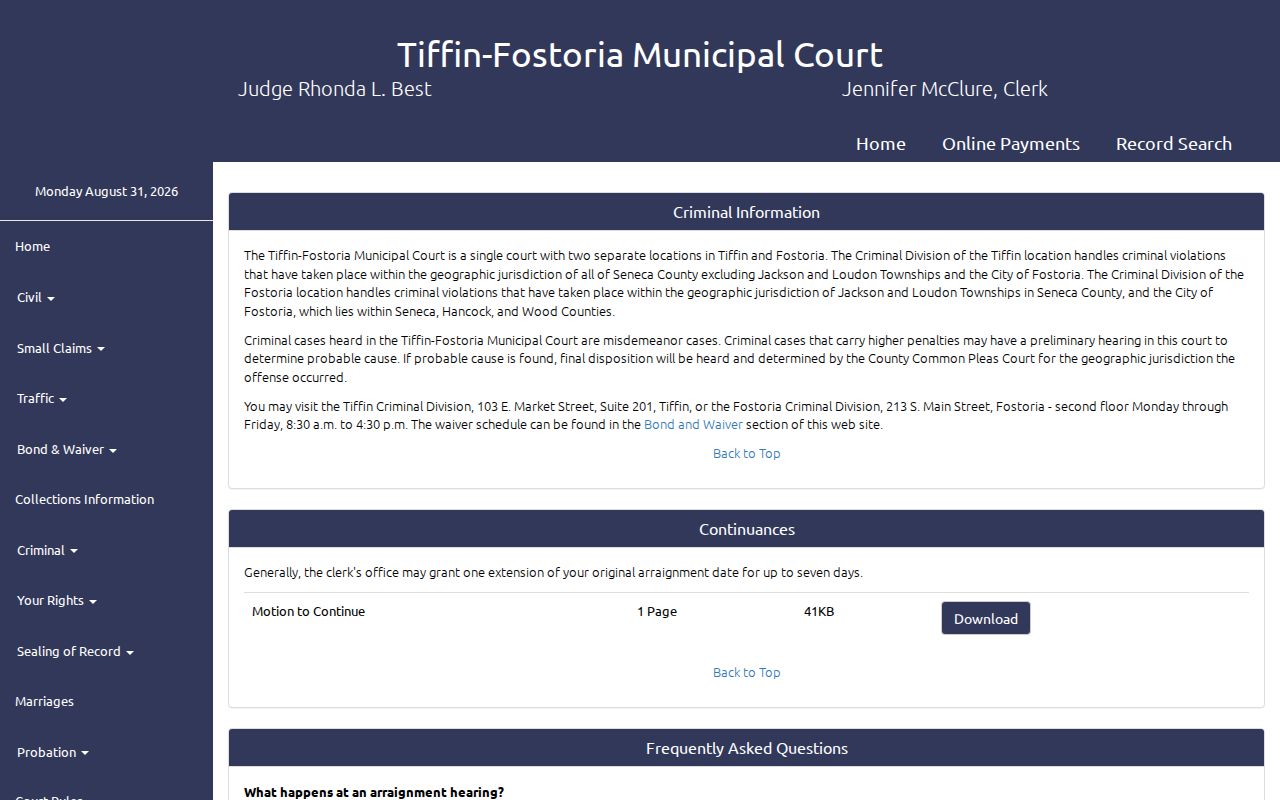
One county, two systems. The Municipal portal covers Criminal, Traffic, Civil, Small Claims, and Parking in a single place, and it works differently from the Common Pleas portal. That one runs on its own filters and its own case-number example, so treat each court docket lookup separately.
Which Court Holds Criminal Dockets
Knowing which clerk holds the file saves time. The Seneca County Clerk of Courts, Legal Department keeps Common Pleas General and Domestic Relations filings. Felony criminal records sit there too. Its Case Inquiry even references local appeal material from the Ohio Third District Court of Appeals. Tiffin-Fostoria Municipal Court keeps its own dockets. Traffic, parking, misdemeanor criminal, civil, and small-claims matters all live there. Pick the wrong court and you will come up empty.
That split is the whole ballgame. Each clerk keeps records for its own court division. Even the offices share the same county courthouse area.
Note: The Common Pleas, Municipal, Probate, and Juvenile clerks maintain different record sets. Their offices can be in the same county.
Seneca County Juvenile Criminal Access
Juvenile Court runs on its own track. Delinquency and juvenile traffic cases follow separate handling. Do not assume they show up in the Probate CaseLook results. Call the Juvenile Division at 419-447-4912 when a juvenile record question comes up. Ohio law also limits juvenile-record release in identified circumstances. So a missing public result does not prove the case does not exist.
Seneca County PIVOT Criminal Docket
PIVOT is a Seneca recovery docket and program, not a public roster you can search. The Common Pleas resource materials describe a program of at least 15 months. Regular status reviews run throughout. Early on, the schedule is intense. PIVOT's first two phases call for court review at least weekly. Phases three and four drop to every two weeks or monthly, and phase five runs at least monthly. Those dates live with the underlying case, not on a separate list. The court's PIVOT recovery-program phase information shows the phase structure behind this Seneca County criminal docket program.
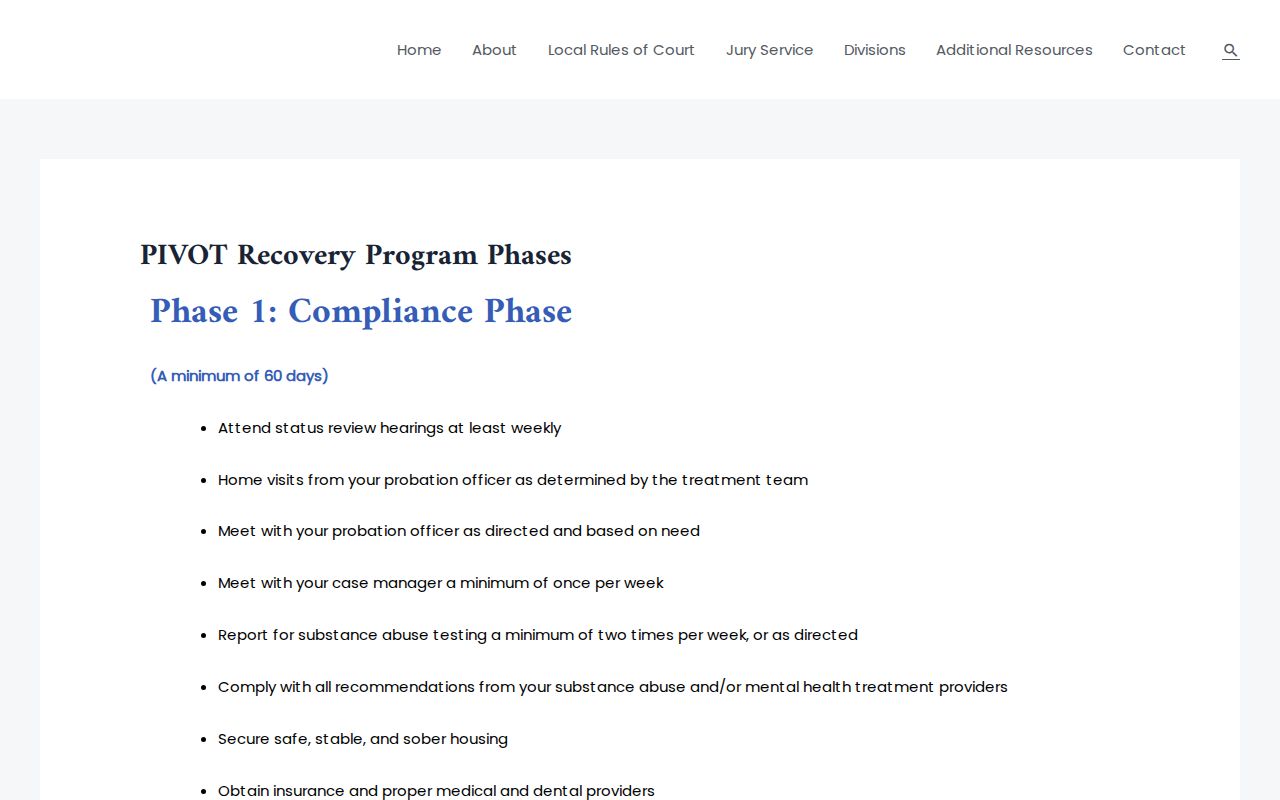
Status-review dates belong to the underlying court matter. They tie to its regular case number. Joining PIVOT does not open a second public search channel. Questions about the underlying record go to the court itself. Ohio's PIVOT-related concurrent-jurisdiction statute sets out the statutory basis for the program.
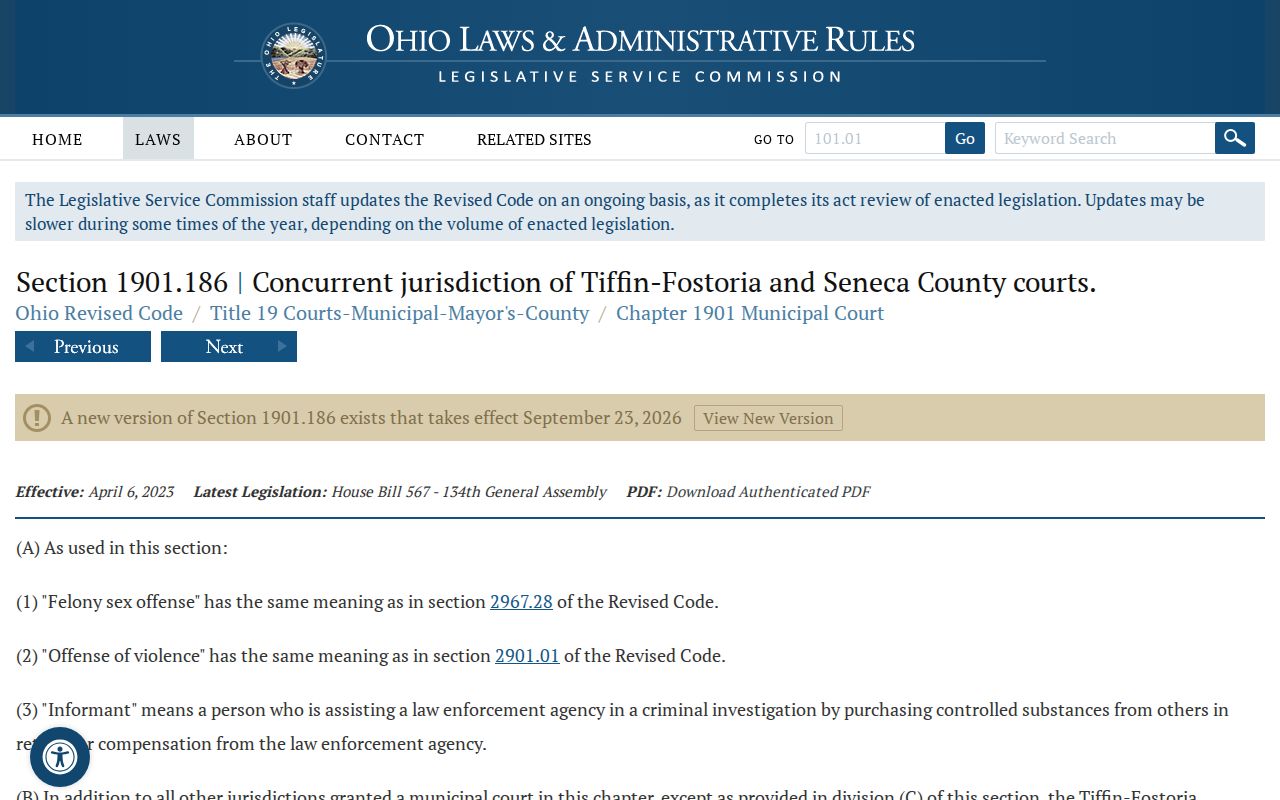
The statute covers only a narrow slice of PIVOT-related concurrent jurisdiction. It does not replace the ordinary court and clerk channels for finding a case docket.
Public Access and Sealed Criminal Dockets
Ohio court-record access is governed mainly by the Supreme Court's Rules of Superintendence. An online search is not a certified record. The local Case Inquiry notice gives the practical limit. A portal result can lag or change, so verified information comes from the court or clerk. R.C. 2303.12 addresses Common Pleas recordkeeping and online general-docket access, subject to restrictions and exceptions.
Sealed is not the same as gone. Some records can be sealed, expunged, confidential by law, redacted, or restricted by court order. The Common Pleas local rules list categories not generally available to the public. Those include certain reports, school records, juvenile records, and documents with protected personal, health, or financial information. An empty search result still proves nothing about whether a court record exists.
Key rules: Sup.R. 11.09 through 11.16 address public access, remote access, redaction, restriction, and related court-record procedures. R.C. 2953.32 supplies sealing and expungement rules for identified conviction and bail-forfeiture records. R.C. 2151.141 limits release of juvenile records in stated circumstances.
Seneca County Criminal Missed Settings
Missed a criminal setting? Confirm it with the court directly. Common Pleas local rules say a criminal failure to appear may bring a warrant. It can also bring an order removing the matter from the active docket. Municipal materials carry the same warning. Before anything else, use the right Calendar Search. Then contact the court that owns the case rather than trusting a cached portal entry.
For Common Pleas, open Calendar Search with the Criminal filter. Note that the date query requires a Beginning Date. Municipal Court keeps its Calendar Search inside the same CaseLook system as the case search. The Tiffin and Fostoria divisions share that system but keep separate clerks and courtroom paths. Court staff can confirm the current setting or explain the local next step.
Note: A continuance request, a changed calendar line, and a removed active-docket entry are different events. Each one needs court-specific confirmation.